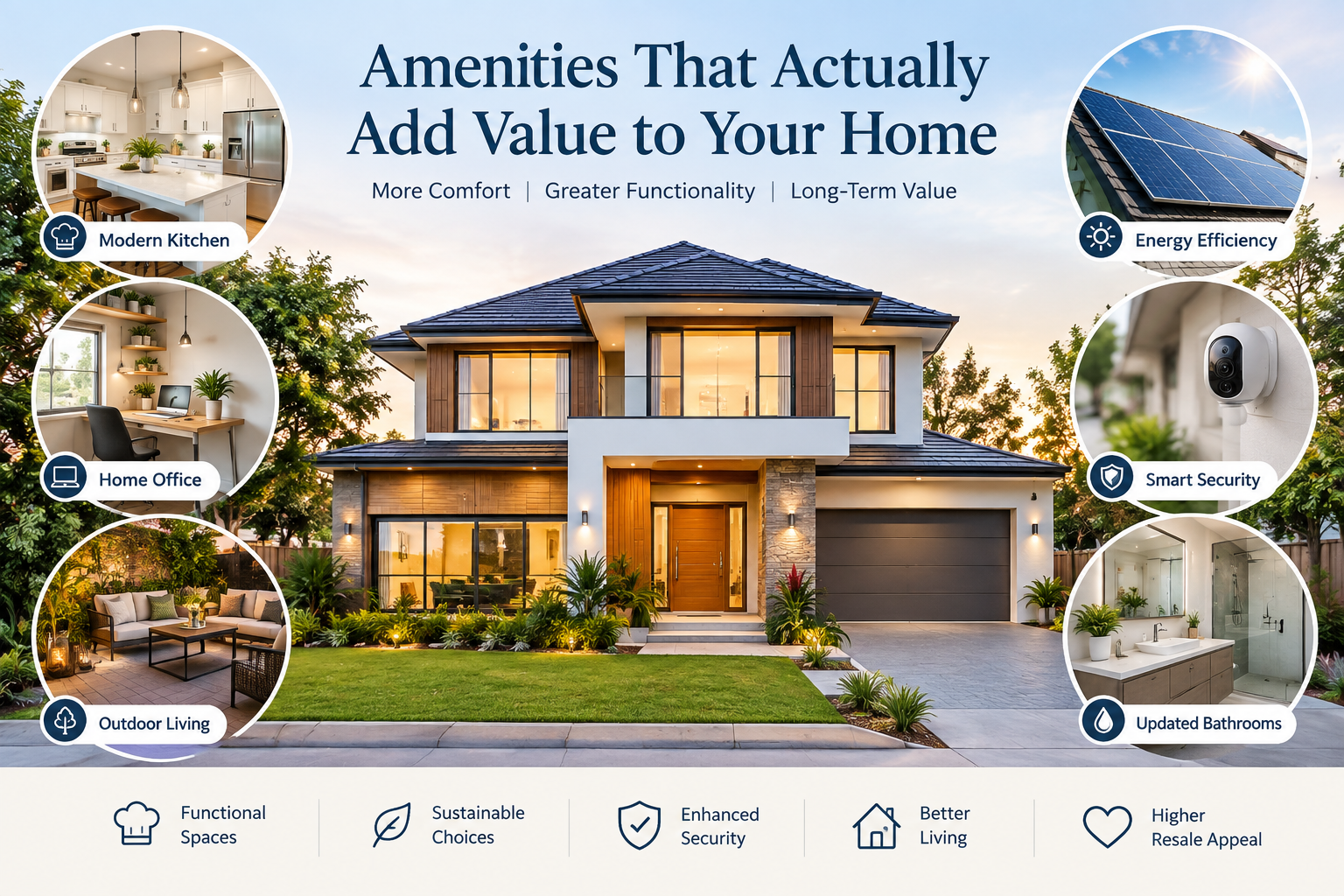
When you’re buying or upgrading a house, it’s ridiculously easy to get distracted by shiny, luxurious flexes. A massive swimming pool, custom high-end decor, or a top-tier home theater might look incredible on day one, but they don’t always translate into real, lasting property value. Some “upgrades” are just expensive money pits, while others genuinely make day-to-day life easier, save you cash, and make future buyers line up with reasonable offers.
If you want the best bang for your buck, ignore the hype and focus on features that balance practical everyday living, lower running costs, and broad appeal.
Here is what actually adds real value to a home- and what to focus on instead of empty luxury.
1. A Kitchen Built for Actual Cooking
The kitchen is still the undisputed heart of the house, but you don’t need to drop a fortune on restaurant-grade appliances to make it valuable. Most people just want a space that feels effortless to cook and hang out in.
- Focus on function: Prioritize solid countertops, smart lighting, sturdy cabinets, and a layout that doesn’t feel cramped.
- The high-value adds: A deep walk-in pantry, a spacious center island, and smart built-in storage will always beat out overly niche, hyper-customized setups that only suit one person’s ultra-specific taste.
2. Energy Upgrades That Slash Monthly Bills
Energy efficiency isn’t just a warm-and-fuzzy green metric anymore- it directly impacts your bank account, and buyers are hyper-aware of running costs.
- Big impact: Solar panels (especially in sunny regions), upgraded insulation, high-efficiency HVAC systems, and double-paned windows.
- Low-hanging fruit: Programmable smart thermostats, draft sealing, and LED setups. Even small tweaks lower monthly bills and keep the house infinitely more comfortable year-round.
3. Smart Tech That Keeps Things Simple
No one wants a home so overly automated that you need an engineering degree just to turn on the living room lights. Stick to intuitive smart home features that actually solve annoying daily issues.
- What works: Video doorbells, keyless smart locks, automated climate controls, and simple security camera setups.
- Keep it simple: Avoid hyper-complex proprietary hardware that ages like milk. Go for reliable, recognizable tech that’s plug-and-play.
4. A Dedicated Space to Work from Home
Remote and hybrid work aren’t going anywhere. A cramped corner in the dining room doesn’t cut it anymore; a true, quiet workspace is a huge selling point.
- What makes it work: Tucking in solid soundproofing, reliable hardwired internet access, plenty of outlets, and natural light transforms a simple spare room into a high-productivity home office.
- Small footprint solutions: If you don’t have a spare bedroom, a built-in pocket desk with smart shelving in a quiet nook still adds massive practical appeal.
5. Storage, Storage, and More Storage
You rarely hear anyone complain that a house has “too much closet space.” Thoughtfully designed storage instantly makes a property feel larger, cleaner, and better organized.
- Key areas: Built-in master bedroom wardrobes, floor-to-ceiling pantry systems, under-stair storage, and heavy-duty garage shelving setups.
- Pro tip: Storage integrated directly into the architecture always looks and feels better than cheap, freestanding furniture slapped on as an afterthought.
6. Low-Maintenance Outdoor Living Spaces
People want to enjoy their yards without feeling like they’ve taken on a second full-time job in yard work.
- High ROI additions: A well-built patio or deck, comfortable covered seating, low-voltage outdoor lighting, and privacy screening.
- Keep it usable: Swap out high-maintenance plants for native, drought-tolerant landscaping. An outdoor kitchen is great, but only if your local climate actually lets you use it more than two months out of the year.
7. Clean, Modernized Bathrooms
Bathrooms don’t need to look like a five-star spa to pull their weight, but they do need to look fresh, spotless, and functional.
- Smart upgrades: Walk-in showers with clean glass, double vanities, updated water-efficient fixtures, and proper ventilation (to avoid mold headaches down the line).
- Design strategy: Go for timeless, neutral tiling and finishes over fast-fading interior design trends.
8. Security Features That Offer Peace of Mind
A safe home is also considered an attractive home. These features offer comfort and peace of mind to the residents. Buyers love security features that integrate effortlessly into the house without making it look like a fortress.
- The essentials: Good exterior lighting (motion sensors work wonders around driveways and side paths), smart video doorbells, sturdy deadbolts, and straightforward security systems.
9. Parking Upgrades & EV Readiness
Parking is gold- especially if you live anywhere near a city center. A secure garage or a well-paved driveway is a base requirement for many buyers.
- Future-proofing: Installing a 240V outlet or a dedicated Level 2 EV charger in the garage is a relatively low-cost project that instantly future-proofs your home for the explosion of electric vehicles.
10. Water Efficiency & Sustainability
Cutting down on the resource consumption significantly lowers monthly bills and keeps maintenance overhead relatively low.
- Easy wins: Aerated faucets, Low-flow dual-flush toilets, drip irrigation systems, and rainwater collection barrels for the garden. These features quietly save money every single day.
11. Clean Air and Solid Ventilation
Indoor air quality directly impacts how a person feels in his home. Stuffy rooms, mold issues, and lingering smells drag down property value fast, also is not food for health.
- Upgrades that matter: High-performance HVAC filters, heat recovery ventilators (HRVs), properly vented range hoods, and dedicated bathroom exhaust fans.
12. Flexible, Multi-Purpose Rooms
Strictly single-use rooms are out; flexible spaces are in. A room that easily shifts roles as your life changes is far more valuable than a hyper-specific layout.
- How to build flexibility: Use neutral finishes, plentiful power outlets, and smart built-in storage so a space can seamlessly pivot from a guest bedroom to a gym, nursery, or hobby room as needed.
The Bottom Line
The best home upgrades share three core traits: you use them every day, they’re built to last, and they appeal to almost anyone.
Before spending a dime on your next renovation, run it through a quick reality check: How much will it cost to install? What’s the ongoing maintenance? Will it lower or raise my utility bills? And most importantly- does it actually make living here easier?
When you prioritize real-world comfort, function, and efficiency over fleeting trends, the financial ROI takes care of itself.
Which specific project are you planning for your property right now? If you’re weighing the costs against the expected ROI, let me know what area you’re focusing on!