Category: Uncategorized

  • How to Compare Two Properties Like a Pro

    How to Compare Two Properties Like a Pro

    When you’re staring at two properties, the hardest part isn’t usually the real estate itself- it’s the mental noise. You find yourself weighing a nicer kitchen against a twenty-minute longer commute, or a bigger floor plan against an older building that might need work in three years.

    To break out of that loop, stop comparing them as full packages. Break them down into how they actually handle the reality of your day-to-day routine.

    Clarify What You’re Buying For

    Before you compare another square foot or price tag, pull back and be honest about your core goal. A home you plan to live in for the next decade requires a completely different lens than an investment property meant to generate steady yield.

    • For day-to-day living: Focus on how the home actually feels to move around in. Prioritize natural light, room flow, storage options, commute strain, and quick access to basic daily errands.
    • For investment or rental: Ignore personal design tastes. Focus entirely on local rental demand, low monthly maintenance fees, tenant turnover rates, and practical infrastructure in the immediate neighborhood.

    Pick your five absolute must-haves. Hold both options against that exact short list. It prevents a flashy feature- like a freshly remodeled lobby or high-end staging- from tricking you into compromising on things that affect your daily life.

    Test the Location on a Normal Tuesday

    A neighborhood can feel peaceful and charming on a Saturday morning walk and completely turn on you during a weekday commute.

    • Run the commute for real: Don’t rely on map estimates. Drive or take transit from both locations to your workplace during actual morning and evening peak hours.
    • Observe at off-hours: Show up around 8:00 AM, 2:00 PM, and 8:00 PM. Pay attention to street parking congestion, delivery truck traffic, late-night street noise, and lighting.
    • Separate promises from reality: If a broker mentions a future transit link, highway bypass, or commercial hub, verify it with actual municipal planning records before letting it influence your decision.

    Calculate the Full Out-of-Pocket Cost

    A lower asking price on a listing flyer rarely tells the whole financial story.

    Cost ComponentWhat to Keep in Mind
    Upfront PurchaseAgreement price, stamp duty, registration fees, legal charges, and broker fees.
    Immediate RepairsFlooring work, kitchen upgrades, bathroom fixes, paint, and moving expenses.
    Long-Term MonthlyMortgage payment, building upkeep fees, taxes, and higher utility baselines.

    If Property A is listed lower than Property B, but needs immediate kitchen work and carries higher monthly upkeep fees, that initial savings disappears almost immediately. Compare the total check you have to write to live there comfortably.

    Look at Usable Space, Not Listed Size

    Two floor plans can claim identical total area on paper and feel wildly different in person. A bad floor plan wastes space on long entry hallways, thick structural pillars, or strange wall angles that make placing furniture a headache.

    • Focus on carpet area: Look at the actual usable floor area rather than gross built-up numbers.
    • Map your furniture: Walk through every room and mentally place your actual belongings. Will your bed block the closet doors? Is there a natural spot for a dining table? Is there enough built-in storage?
    • Check daylight: Turn off all the interior lights during a daytime visit to see how much actual natural sunlight the space gets.

    Look Past the Cosmetic Polish

    Sellers know how to stage a property to mask basic wear and tear. Fresh paint and bright warm lighting can hide plenty of small issues during a quick fifteen-minute walkthrough.

    • Check for water issues: Look closely at ceiling corners, under sinks, near bathroom walls, and around window frames for stains, flaking paint, or signs of past leaks.
    • Test the basics: Turn on water taps to check pressure, flush toilets, test a few light switches, and open every window to make sure nothing sticks.
    • Research the background: For newer developments, look at how the builder’s past projects have held up over time. For older buildings, consider hiring a structural inspector to check the plumbing and electrical backbone.

    Factor In the Ongoing Monthly Expenses

    The purchase price is just the entry fee. The long-term impact on your wallet comes down to recurring costs.

    • Compare monthly building upkeep fees, property taxes, and expected utility costs. A high monthly maintenance fee stays with you for as long as you own the property.
    • If you plan to rent it out, look at current active rental listings in the immediate block- not just broker estimates- and build in a buffer for occasional vacant months.

    Verify the Legal Foundation

    Legal paperwork isn’t exciting, but verifying clear title ownership protects your life savings.

    • Review past title deeds, ownership history, encumbrance certificates, occupancy certificates (OC), and property tax receipts.
    • For under-construction options, confirm that all local municipal approvals and regulatory registrations are active and cleared.
    • If the paperwork feels complicated, hire a property lawyer to review the documents independently. A small legal fee upfront prevents massive disputes later.

    Drop By Unannounced for a Final Look

    If you are still stuck in a dead heat, go back to both properties without making an appointment. Show up at a busy hour- like a Friday evening or a Sunday morning.

    Watch how the building operates when sales agents aren’t guiding the tour. Check elevator wait times, visitor parking, security gate checks, and general trash maintenance. If you spot residents in the common areas, ask them a couple of direct questions about water reliability, power backup, and how responsive management is. Current residents will give you an honest take faster than anyone else.

    Every property involves tradeoffs. You are rarely choosing between a perfect home and a bad one; you are choosing which specific set of compromises fits your routine best.

    When you judge both options by the exact same rules- real out-of-pocket costs, practical floor plans, tested commutes, and clean legal titles- the right call usually becomes obvious. And if neither option feels solid after running the numbers? Walking away to keep looking is always a smart, valid move.

  • Luxury Real Estate in Mumbai: The Rise of High-End Homes

    Luxury Real Estate in Mumbai: The Rise of High-End Homes

    If you have been driving through Mumbai lately, especially around Worli, Bandra, Prabhadevi or South Mumbai, you may have noticed something. The skyline is changing.

    Old buildings are coming down. New towers are going up. And many of these new homes are not being built for the average homebuyer. They are large, expensive and packed with features that would have sounded excessive a decade ago.

    Private elevators. Sea views. Huge terraces. Concierge services. Private gyms. Swimming pools. Smart-home systems. In some cases, even hotel-style services.

    Luxury real estate in Mumbai is clearly having a moment.

    But this isn’t really a new story. Mumbai has always had expensive homes. What has changed is the scale of the market and, more importantly, what buyers now expect when they pay a premium.

    For many wealthy buyers, a luxury home isn’t simply a place to live anymore. It is about comfort, privacy, location and, to some extent, the lifestyle that comes with the address.

    So, why is luxury housing growing so quickly?

    There isn’t one simple answer.

    Mumbai is India’s financial capital, and a large share of the country’s wealth is concentrated here. Business owners, entrepreneurs, senior corporate professionals, investors and people from the entertainment industry all call the city home.

    Over the years, many of these buyers have become wealthier. Naturally, their expectations have changed too.

    Someone who once considered a three-bedroom apartment a dream home may now be looking for a four- or five-bedroom residence with a large living room, a view, better amenities and plenty of privacy.

    And when money isn’t the biggest limitation, buyers start looking at things that most people don’t usually consider.

    Which floor is the apartment on?

    How many apartments are there on that floor?

    Is the lift shared?

    How good is the view?

    Who else lives in the building?

    How private is the entrance?

    These small details can make a surprisingly big difference in Mumbai’s luxury market.

    The biggest luxury in Mumbai? Space

    There is something slightly ironic about luxury housing in Mumbai.

    The city has some of India’s most expensive real estate, but space is still limited.

    Mumbai is surrounded by the sea, and much of the city is already built up. You can’t simply keep expanding outward forever. Land in established, desirable neighbourhoods is extremely difficult to find.

    That is one reason redevelopment has become such a big part of the city’s real estate market.

    An old building can make way for a much taller and more modern one. Residents get new homes, developers get additional development potential, and the neighbourhood slowly changes.

    For luxury buyers, this creates an interesting opportunity. They can buy a brand-new, high-end home without giving up the advantages of living in an established part of Mumbai.

    And that matters.

    Someone who has spent years living in South Mumbai or Bandra may not want to move to the outskirts just to get a bigger home. They would rather pay more and stay close to their workplace, family, favourite restaurants, schools and social circle.

    In Mumbai, location isn’t just about convenience. It is part of the value of the property.

    Luxury has changed too

    Perhaps the most interesting part of this trend is that luxury itself has changed.

    A large apartment with expensive marble floors used to be enough to create a sense of luxury. Today, buyers expect considerably more.

    They want homes that make everyday life easier.

    A private lift means fewer people coming and going. A well-designed home means less wasted space. A gym downstairs means you don’t have to drive somewhere else to exercise. A swimming pool, spa or lounge gives residents places to relax without leaving the building.

    Then there is technology.

    Smart lighting, automated curtains, climate control, security systems and home entertainment can all be controlled with a phone or a central system.

    None of these things are absolutely necessary, of course. But that’s the point of luxury. It is usually about having the option.

    The best luxury homes don’t necessarily scream, “Look how expensive I am.”

    They simply make life a little easier.

    Mumbai’s old favourites are still winning

    When it comes to luxury property, Mumbai buyers still have a strong preference for certain locations.

    Worli is probably the clearest example.

    With its sea-facing homes, central location and rapidly changing skyline, Worli has become one of the city’s biggest luxury residential hubs. There is a certain appeal to coming home to a high-rise apartment and seeing the sea from your living room.

    Bandra has a different personality.

    Bandra West is busy, fashionable and full of restaurants, cafés, shops and entertainment. People who choose the area aren’t necessarily looking for silence. They want to be in the middle of everything.

    Then there is South Mumbai.

    Malabar Hill, Cuffe Parade, Tardeo and the surrounding areas have had a reputation for wealth and exclusivity for decades. That reputation hasn’t disappeared. If anything, newer luxury developments are adding another layer to it.

    Juhu and Prabhadevi also remain popular with buyers looking for premium homes.

    The common factor is simple: these are established locations. They already have the infrastructure, social environment and prestige that luxury buyers are looking for.

    The really expensive homes are a market of their own

    There is luxury, and then there is Mumbai’s ultra-luxury market.

    Homes costing ₹50 crore, ₹100 crore or more may sound almost unreal to most people. Yet properties at these prices do find buyers.

    According to JLL, Mumbai accounted for 69% of homes priced at ₹100 crore or more sold across Mumbai and Delhi NCR over a three-year period through early 2025.

    The interesting thing is that many of these buyers are still choosing apartments.

    Why?

    Because a top-end apartment in Mumbai can offer something that is difficult to replicate with a standalone house: a prime location, security, incredible views, high-end facilities and a certain level of exclusivity- all in one property.

    For someone with the means to spend that kind of money, the question isn’t necessarily, “Why should I spend ₹100 crore on an apartment?”

    It may simply be, “Is there another property in this location that gives me what I want?”

    And sometimes, the answer is no.

    Developers have noticed what buyers want

    Real estate developers have obviously been paying attention to all of this.

    Luxury projects today are marketed very differently from ordinary residential developments.

    The focus isn’t only on the number of bedrooms or the carpet area. Developers talk about architecture, interiors, landscaping, wellness, privacy and lifestyle.

    Some buildings are designed to feel more like five-star hotels than traditional apartment complexes.

    And there is a reason for this.

    When someone is spending several crores on a home, they are likely to compare it very carefully with other properties. A developer can’t simply say, “We have a great location.”

    The buyer wants to know what makes the property different.

    Is the architecture special?

    Is the construction quality good?

    Are the amenities actually useful?

    Will the property age well?

    Is the building private enough?

    These questions are becoming increasingly important.

    It’s not just about billionaires

    It is easy to look at a ₹100-crore apartment and assume that Mumbai’s luxury market is only for billionaires.

    That’s not really the full picture.

    The wider premium housing market includes successful professionals, business families, entrepreneurs and people upgrading from older properties.

    Some buyers are moving because their families have grown. Others want a newer building with better facilities. Also, some simply want to just upgrade their lifestyle after years of building wealth while working.

    There are also a bunch of people buying luxury homes as a part of investment.

    The property market of Mumbai has always attracted investors because of its economic importance and limited supply in prime areas. A well-located high-end property can be used as a residence today and has potential to become a valuable asset for the long term.

    Of course, real estate is never a guaranteed investment, and luxury properties come with their own risks. But for people who already have a significant amount of wealth, premium real estate can be one part of a larger future investment portfolio.

    Will the luxury boom continue?

    Probably- but it may not look exactly the same in the future.

    The most expensive and biggest homes will continue to attract attention, but buyers are becoming more discerning.

    People with money can afford to be selective. They don’t necessarily want the most expensive property. They want the property that feels worth the money.

    That means developers will have to focus on quality rather than simply making apartments bigger.

    Connectivity will matter too. As Mumbai’s roads, public transport and infrastructure improve, certain areas that were once considered less attractive could become more appealing to premium buyers.

    Redevelopment will also continue to reshape older neighbourhoods.

    So, while Mumbai’s skyline may look very different ten years from now, one thing is unlikely to change: good property in a good location will always be valuable.

    Mumbai’s idea of luxury is evolving

    The rise of luxury real estate in Mumbai isn’t really about people suddenly wanting bigger houses.

    It is about how the idea of a good home has changed.

    People who can afford it are looking for homes that save them time, give them privacy and make everyday life more comfortable. They want good design, good views, good amenities and, above all, a location they don’t have to compromise on.

    That is why places like Worli, Bandra, Juhu and South Mumbai continue to attract buyers even when prices reach levels that seem extraordinary to most of us.

    Mumbai has always been a city where space comes at a price.

    Today, that price is getting higher- but so are the expectations attached to it.

    And perhaps that is what makes the city’s luxury real estate market so fascinating. It isn’t just about expensive apartments rising into the sky.

    It is about a city changing the way its wealthiest residents want to live.

    In Mumbai, where every square foot matters, true luxury may simply be having the space, privacy and location to live exactly the way you want.

  • Renting vs. Buying: Which Is Better in 2026?

    Renting vs. Buying: Which Is Better in 2026?

    “Should I keep renting, or should I finally buy a house?”

    If you’re living in a city where property prices seem to go up every time you check them, chances are you’ve asked yourself this question at least once.

    For a long time, buying a home was seen as the obvious goal. You got a job, saved for a down payment, took a home loan and eventually became a homeowner. Renting, on the other hand, was often treated as something you did only until you were ready to buy.

    Things aren’t quite that simple anymore.

    In 2026, renting can be a perfectly sensible choice, especially for people who value flexibility. At the same time, buying can still be a great long-term decision if your finances are in good shape and you plan to stay in the same place for years.

    So, which one is actually better?

    It depends.

    And while that may not be the exciting answer you were hoping for, it’s probably the most honest one.

    Renting Doesn’t Mean You’re Throwing Money Away

    You’ve probably heard this one before:

    “Why are you paying rent? You’re just making your landlord rich.”

    It sounds convincing, but there’s more to the story.

    When you rent, you’re paying for a place to live. You’re also paying for flexibility. If your job changes, your family situation changes, or you simply decide that you don’t like your neighbourhood anymore, moving is relatively straightforward.

    You aren’t tied to a 20-year home loan.

    That’s a big deal.

    Imagine you’re in your late 20s and working in a career where changing cities is fairly common. Buying a home might sound like a smart investment, but what happens if you get a great job offer in Bengaluru, Hyderabad or Pune two years later?

    Suddenly, that “investment” becomes something you need to manage from another city.

    Renting can save you from that problem.

    Renting also needs less money upfront

    Buying a home requires a lot of money before you even get the keys.

    There’s the down payment, stamp duty, registration, legal expenses, moving costs, furniture and plenty of smaller expenses that somehow keep appearing.

    Renting usually doesn’t require anywhere near that kind of upfront commitment.

    That means you can keep some of your savings available for emergencies or invest the money elsewhere.

    Of course, whether those investments perform well is another question. Nothing is guaranteed.

    But having access to your savings can be valuable, especially when you’re still building your financial foundation.

    But There Is a Catch to Renting

    Renting has one obvious disadvantage: the house isn’t yours.

    You can live in the same apartment for ten years, pay rent every single month and still have no ownership in the property.

    And then there’s the uncertainty.

    Your landlord might increase the rent. They might decide to sell the property. You might have to move when you would rather stay.

    There can also be restrictions on what you can do with the home.

    Want to knock down a wall? Probably not.

    Want to repaint everything? Better ask first.

    Want to make the place feel completely yours? That can be difficult when you’re renting.

    For some people, these things are minor inconveniences. For others, they become a big deal over time.

    Buying a Home Feels Different

    There’s a certain satisfaction in knowing that the house you’re living in belongs to you.

    You can decorate it however you want. You can renovate the kitchen. You can paint the walls without asking anyone for permission.

    More importantly, you’re gradually building ownership in the property as you repay your home loan.

    That’s one of the biggest reasons people still choose to buy in 2026.

    You’re building an asset

    A portion of your home-loan payment goes towards the principal amount. Over time, that increases your equity in the property.

    And if the property becomes more valuable, you could potentially benefit from that increase when you eventually sell it.

    But there’s an important word here: potentially.

    Property prices don’t rise at the same rate everywhere.

    A flat in a well-connected neighbourhood with good infrastructure may perform very differently from a property in an area where demand remains weak.

    So “property always goes up” isn’t really a strategy.

    The location, price you pay and length of time you hold the property all matter.

    The Part Nobody Likes Talking About: Other Costs

    Here’s where buying a home gets interesting.

    Suppose you’re currently paying ₹30,000 in rent and you’ve found a house where the EMI would be ₹40,000.

    At first glance, you might think, “That’s only ₹10,000 more. I can manage that.”

    But your EMI isn’t the entire cost of owning a house.

    You may also have:

    • Maintenance charges
    • Property taxes
    • Home insurance
    • Repairs
    • Renovation expenses
    • Registration and stamp duty
    • Loan-processing and other charges
    • Furniture and appliances

    And then there’s the money you put into the down payment.

    Let’s say you put ₹20 lakh into a property.

    That ₹20 lakh is now sitting in your home instead of somewhere else.

    This is called the opportunity cost, and it’s easy to overlook.

    If you rented and invested some of that money instead, your investments could potentially grow over the years.

    That doesn’t automatically make renting better. Investments can go down as well as up, and property can appreciate.

    The point is simply that the comparison needs to be bigger than:

    Rent = ₹30,000

    EMI = ₹40,000

    There is a lot more going on.

    So, When Does Renting Make More Sense?

    There are situations where renting is probably the more comfortable choice.

    For example, renting could suit you if you’re still figuring out your career or expect to move cities in the next few years.

    It can also make sense if buying a home would use almost all of your savings.

    Having a beautiful apartment isn’t much fun if you’re constantly worried about how you’ll pay the next EMI.

    Renting may also be worth considering when property prices in your preferred neighbourhood are simply too high compared with the rent.

    This is particularly relevant in expensive Indian cities.

    You might be able to rent a comfortable home for an amount that’s much lower than the monthly cost of owning a similar property.

    If you invest the difference consistently and stay disciplined, renting can work surprisingly well.

    And When Does Buying Make More Sense?

    Buying starts looking more attractive when you know you’re staying put.

    If you’ve found a city you love, have a stable job and can genuinely see yourself living in the same area for the next 10 or 15 years, buying becomes easier to justify.

    It also helps if you have:

    • A stable source of income
    • A sizeable down payment
    • An emergency fund left after the purchase
    • Manageable existing debt
    • An EMI you can comfortably afford

    Notice the word comfortably.

    Just because a bank approves a large loan doesn’t mean you should take the maximum amount available.

    Your future self will thank you for leaving some breathing room in your budget.

    Don’t Buy a House Just Because Everyone Else Is

    This is probably the easiest trap to fall into.

    Your friend buys a house.

    Then your cousin buys one.

    Your parents start asking when you’re going to buy.

    You start looking at property listings.

    Before you know it, you’re considering a ₹1 crore home because everyone around you seems to think that’s what you’re supposed to do next.

    Take a breath.

    Buying a home is a huge financial decision. It shouldn’t happen because you feel like you’re falling behind.

    Maybe renting for another five years while building your investments is the right choice for you.

    Maybe buying now is right.

    There isn’t a prize for becoming a homeowner at 30 instead of 35.

    Renting vs. Buying in 2026: A Quick Look

    If this sounds like you…Renting may suit youBuying may suit you
    You may move cities soon
    You want maximum flexibility
    You don’t have much savings yet
    You have a stable income
    You plan to stay for 10+ years
    You have a healthy emergency fund
    You want to build property ownership
    You don’t want major maintenance responsibility
    You want complete control over your home

    Of course, real life isn’t as neat as a table.

    You might tick boxes on both sides.

    That’s completely normal.

    The Question You Should Really Ask

    Instead of asking:

    “Is renting better than buying?”

    Try asking:

    “Which option makes more sense for my life right now?”

    That’s a much better question.

    If buying would leave you financially stretched, renting isn’t a failure.

    If you can comfortably afford a home and genuinely want to stay there for a long time, buying isn’t necessarily a bad financial decision just because renting looks cheaper on paper.

    Money matters, but so does your lifestyle.

    Maybe you want the freedom to move.

    Maybe you want a permanent home where your children can grow up.

    Maybe you want to avoid debt.

    Maybe you’ve always wanted a home of your own.

    All of these things matter.

    Final Thoughts

    There probably won’t be one clear winner in the renting vs. buying debate in 2026.

    And honestly, there doesn’t need to be.

    For one person, renting for several more years could be the smartest thing they do financially.

    For someone else, buying a home could provide stability, comfort and an asset that becomes valuable over the long term.

    The trick is to stop looking at the decision as rent versus EMI.

    Look at the bigger picture.

    Consider the down payment, maintenance, taxes, loan interest, property prices, rent, investment opportunities and- perhaps most importantly- how long you actually expect to stay in the home.

    Then look at your own life.

    Not your neighbour’s.

    Not your friend’s.

    Not what your parents think you should do.

    Your life. Your finances. Your plans.

  • How To Choose The Right Neighbourhood?

    How To Choose The Right Neighbourhood?

    Choosing a home is about so much more than finding the right apartment layout, a nice coat of paint, or a price tag that works on paper. At the end of the day, the neighborhood you pick shapes your entire routine. It dictates your morning stress levels, how easily you can grab dinner when you’re too tired to cook, where your kids play, and whether you actually feel safe walking back from the bus stop after dark. 

    If you’re staring at a list of potential locations and feeling overwhelmed, you aren’t alone. Here is how to strip away the marketing hype and figure out which spot actually feels like home.

    1. Match the Neighborhood to Your Daily Life

    Before opening real estate apps, take an honest look at your day-to-day habits. Are you someone who loves stepping out for a morning coffee and hearing the buzz of city life, or do you need absolute silence and a nearby park to unwind? If you work from home, high walkability to quiet cafes might be a priority. If you have kids or care for family, proximity to good schools and medical care instantly takes top billing. Write down your absolute non-negotiables first.

    2. Test the Real Commute

    A stunning living room loses its charm fast when you spend two hours stuck in gridlock every evening. Never trust mapping apps during mid-day lulls. Check transit times, traffic patterns, and train connections specifically during peak rush hours. Beyond time, look at the physical effort: Are roads perpetually bottlenecked? Is parking a daily battle? Is the local station dangerously overcrowded at 8:30 AM? Adding just 20 minutes each way steals hours of your personal life every single week.

    3. Account for Hidden Living Costs

    The baseline rent or mortgage isn’t the whole financial story. High-end neighborhoods often come with steeper grocery prices, higher maintenance or association fees, pricey parking permits, and expensive nearby dining options. Conversely, paying a bit more in rent for a location closer to your office might actually save you a chunk of change on fuel, ride-shares, and transit passes.

    4. Gauge Safety Beyond the Headlines

    Neighborhood reputations can be outdated or inaccurate. Pay attention to basic, practical infrastructure when you visit:

    • Are streetlights functioning and bright along secondary roads?
    • Is there steady foot traffic, or do streets turn completely desolate after dusk?
    • How far away are police stations, fire services, and emergency rooms?
    • Is there active security or gated access if you’re looking at apartments?

    5. Map Out Everyday Conveniences

    Focus on the places you visit multiple times a week rather than destination spots you visit once a year. Having a reliable pharmacy, a solid grocery store, a gym, and a quick-bite restaurant within a 5-to-10-minute radius drastically improves your quality of life. You don’t need a massive mall around the corner, but easy access to daily essentials keeps life running smoothly.

    6. Evaluate Connectivity and Transit Options

    Even if you drive everywhere today, good public transportation and highway access protect your long-term flexibility and property value. Check proximity to major arterial roads, bus routes, metro stops, and train lines. If you travel frequently for work, factor in how easy it is to reach major transport hubs or the airport.

    7. Sense the Atmosphere and Noise

    Two locations can cost the exact same amount but offer wildly different living experiences. Spend time listening. Is there constant construction noise, heavy vehicle rumble, or loud music from nearby nightlife? Is there a factory downwind or a major commercial strip right outside your window? If you need quiet to sleep or focus, living off a main thoroughfare will get frustrating fast.

    8. Do a Four-Point Visit

    Never commit based on photos, virtual tours, or a single weekend walkthrough. Visit the area at four distinct times to see its real personality:

    • Morning Rush (7:30 AM – 9:00 AM): See real-world traffic, noise, and neighborhood hustle.
    • Mid-Afternoon (2:00 PM – 3:30 PM): Check general activity levels, parking availability, and maintenance.
    • Evening (8:00 PM – 9:30 PM): Assess street lighting, foot safety, and local noise.
    • Weekend: Watch how residents use the space when they aren’t working—are parks overcrowded, or is the community active and friendly?

    9. Talk to the Locals

    The fastest way to get raw, honest information is to chat with people who already live there. Catch a local shopkeeper, a resident walking their dog, or a neighbor in the building lobby. Ask simple, direct questions:

    • What’s the worst thing about living here?
    • Are there frequent power cuts, water shortages, or drainage issues when it rains?
    • How bad does traffic get on weekday mornings?
    • Does construction noise ever stop around here?

    10. Factor in the Next Five Years

    Ask yourself if this area will still serve you down the road. Look into municipal plans for the area. Upcoming infrastructure like new transit lines, roads, or commercial centers can boost your home’s value and convenience. However, massive ongoing development also means years of dust, heavy truck movement, and construction noise before things get better.

    Build a Quick Comparison Matrix

    When you are weighing three or four areas, strip away emotional bias by scoring them from 1 to 5:

    CriteriaScore (1–5)Notes
    Commute EasePeak traffic times, transit options
    Overall AffordabilityRent/mortgage + local cost of living
    Safety & LightingEvening feel, emergency access
    Daily AmenitiesSupermarkets, pharmacies, gyms
    Noise & VibeCommercial activity, traffic volume
    Future PotentialPlanned infrastructure vs. construction fatigue

    Prioritize Trade-Offs Over Perfection

    No neighborhood scores a perfect 5/5 across the board. The trick isn’t finding a place that has zero flaws; it’s finding a place where the flaws don’t mess with your personal lifestyle. You might trade an extra ten minutes of commuting for a quiet street with green space, or accept a smaller place if it means being able to walk everywhere. Figure out what you can live with- and what you can’t live without- and the right choice will make itself clear.

  • Residential vs Commercial Real Estate: Which Is Better for Investors?

    Residential vs Commercial Real Estate: Which Is Better for Investors?

    Residential vs Commercial Real Estate: Which Is Better for Investors? 

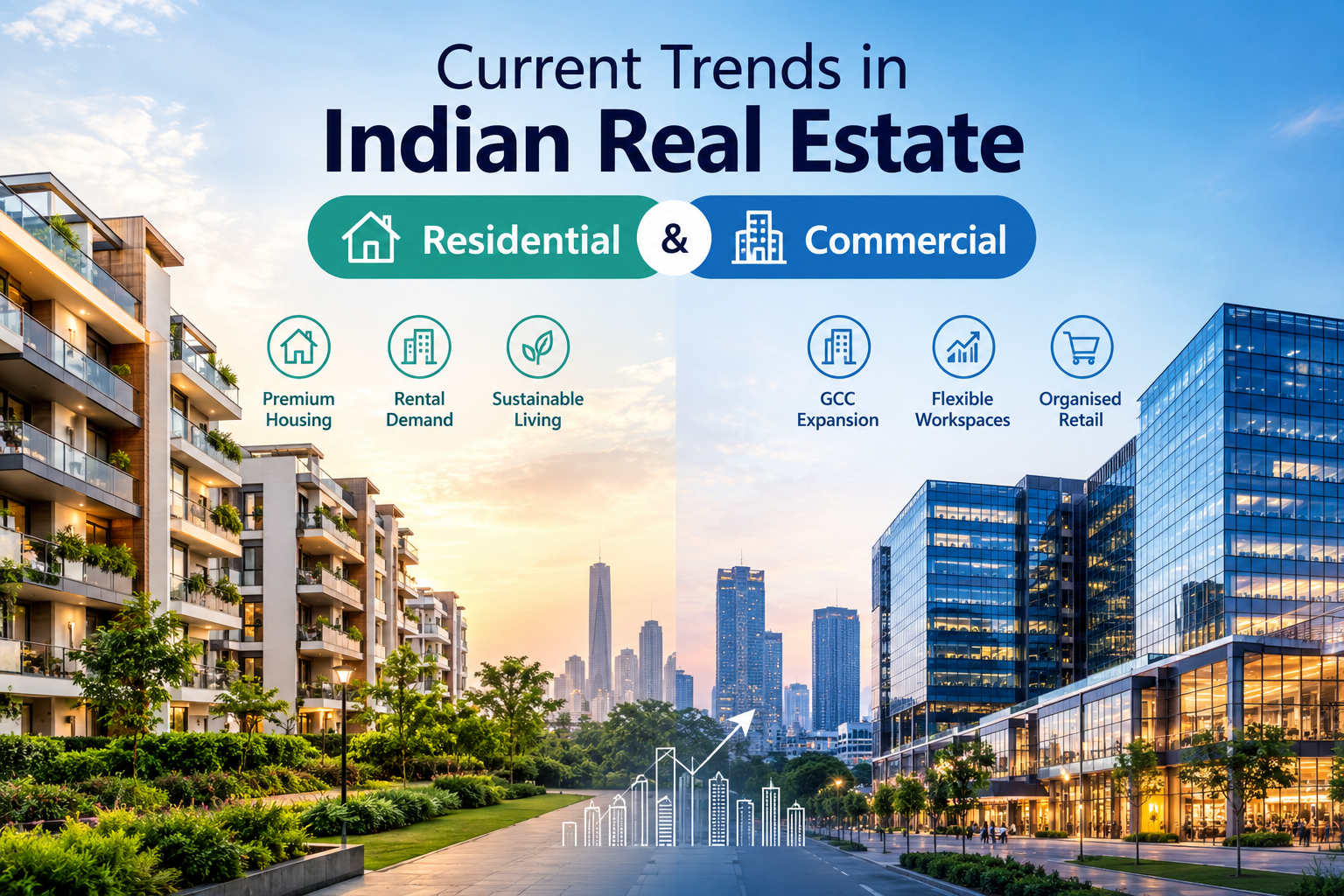
    Real estate remains one of the most reliable ways to build wealth, whether you want passive rental income, solid property appreciation, or a way to balance out a portfolio. But one big decision usually stalls people early on: should you invest in residential or commercial property?

    Residential real estate covers places where people live- apartments, single-family homes, duplexes, and townhouses. Commercial real estate is designed for business related activities which includes retail storefronts, office spaces, warehouses, strip malls, and industrial facilities.

    Neither of the options is universally “better.” The right choice boils down to your starting capital, your risk tolerance, how much time you want to spend managing things, and where you are on your investing path.

    Quick Comparison Matrix

    Investment FactorResidential Real EstateCommercial Real Estate
    Capital BarrierLower initial capital; easier to financeHigher initial capital & larger down payments
    Tenant Pool & DemandBroad demand; housing is a basic necessityNiche demand tied to local business health
    Average Lease TermTypically short-term (6 to 12 months)Multi-year contracts (3 to 10+ years)
    Vacancy RiskLower duration risk; quicker to re-tenantHigher duration risk; longer extended vacancies
    Management EffortHands-on, frequent tenant interactionOften handled by third-party PMs or corporate entities

    The Major Differences (Beyond the Numbers)

    1. Getting Your Foot in the Door

    Residential properties are much easier for most people to buy. Bank loans are straightforward, down payment requirements are standard, and you can start small with a single condo or townhome. Commercial properties require real capital. You need significantly larger reserves for down payments, tenant build-outs, maintenance, and insurance long before a tenant ever pays their first month’s rent.

    2. Rent Dynamics Along With Cash Flow

    On paper, commercial properties often promise better cash flow. Businesses rent bigger spaces, pay higher dollar amounts, and frequently sign triple-net (NNN) leases where they cover property taxes, insurance, and maintenance costs. Residential rents yield less outright income, but because housing is an absolute necessity, finding someone to fill a vacant bedroom is far easier in almost any economic climate.

    3. Leases and Vacancy Realities

    Residential tenants typically sign 1-year leases. This gives you regular opportunities to raise rents to match local inflation, but it also means dealing with frequent turnover. Commercial leases run for several years. That gives you long-term, predictable income, but if a commercial tenant leaves, that space might sit empty for months- or even a year- while you search for a specific type of business to take over.

    4. Management Headaches

    Managing a home usually means dealing with broken water heaters, late rent calls, and tenant turnover. It’s simple, but it takes time. Commercial management is much more technical- dealing with building code compliance, complex maintenance contracts, and commercial lease terms. Most commercial owners hire dedicated property managers to handle the heavy lifting, which cuts into profit margins.

    Understanding Total Returns

    Never buy a property based on headline rental numbers alone. A building with huge monthly rent checks can turn into a money pit if operating costs, property taxes, maintenance, and extended vacancy periods eat up all the profits.

    Whether you choose residential or commercial, base your decisions on real metrics:

    • Net Operating Income (NOI): What is left after paying all daily operating costs.
    • Cap Rate: The property’s expected rate of return based on the income it generates.
    • Cash-on-Cash Return: The actual cash return relative to the amount of cash you put down.

    Appreciation works differently for both, too. Residential prices move largely with neighborhood demand, school districts, and homebuyer sentiment. Commercial property values are tied directly to the income the building produces- raise the rent or secure a higher-tier corporate tenant, and the property’s total market value goes up instantly.

    Who Wins for Beginners?

    If you are just starting out, residential property is almost always the safer proving ground.

    It teaches you the core mechanics of real estate- evaluating a deal, managing tenants, running numbers, and handling repairs- without risking corporate-level liabilities. As your balance sheet grows and you get comfortable reading commercial financial statements, moving into commercial assets or syndications becomes a natural next step.

    That said, you don’t have to pick one forever. Many seasoned investors build a strong baseline in residential real estate for stability and long-term capital growth, then use that equity to buy commercial assets for higher ongoing cash flow.

    Success isn’t about choosing a side- it comes down to finding a solid property, paying the right price, and securing tenants who actually pay on time.

    What specific property types or locations are you considering for your next move? I’d be happy to break down the numbers on a specific deal with you.

  • 12 Home Amenities That Actually Add Value

    12 Home Amenities That Actually Add Value

    When you’re buying or upgrading a house, it’s ridiculously easy to get distracted by shiny, luxurious flexes. A massive swimming pool, custom high-end decor, or a top-tier home theater might look incredible on day one, but they don’t always translate into real, lasting property value. Some “upgrades” are just expensive money pits, while others genuinely make day-to-day life easier, save you cash, and make future buyers line up with reasonable offers.

    If you want the best bang for your buck, ignore the hype and focus on features that balance practical everyday living, lower running costs, and broad appeal.

    Here is what actually adds real value to a home- and what to focus on instead of empty luxury.

    1. A Kitchen Built for Actual Cooking

    The kitchen is still the undisputed heart of the house, but you don’t need to drop a fortune on restaurant-grade appliances to make it valuable. Most people just want a space that feels effortless to cook and hang out in.

    • Focus on function: Prioritize solid countertops, smart lighting, sturdy cabinets, and a layout that doesn’t feel cramped.
    • The high-value adds: A deep walk-in pantry, a spacious center island, and smart built-in storage will always beat out overly niche, hyper-customized setups that only suit one person’s ultra-specific taste.

    2. Energy Upgrades That Slash Monthly Bills

    Energy efficiency isn’t just a warm-and-fuzzy green metric anymore- it directly impacts your bank account, and buyers are hyper-aware of running costs.

    • Big impact: Solar panels (especially in sunny regions), upgraded insulation, high-efficiency HVAC systems, and double-paned windows.
    • Low-hanging fruit: Programmable smart thermostats, draft sealing, and LED setups. Even small tweaks lower monthly bills and keep the house infinitely more comfortable year-round.

    3. Smart Tech That Keeps Things Simple

    No one wants a home so overly automated that you need an engineering degree just to turn on the living room lights. Stick to intuitive smart home features that actually solve annoying daily issues.

    • What works: Video doorbells, keyless smart locks, automated climate controls, and simple security camera setups.
    • Keep it simple: Avoid hyper-complex proprietary hardware that ages like milk. Go for reliable, recognizable tech that’s plug-and-play.

    4. A Dedicated Space to Work from Home

    Remote and hybrid work aren’t going anywhere. A cramped corner in the dining room doesn’t cut it anymore; a true, quiet workspace is a huge selling point.

    • What makes it work: Tucking in solid soundproofing, reliable hardwired internet access, plenty of outlets, and natural light transforms a simple spare room into a high-productivity home office.
    • Small footprint solutions: If you don’t have a spare bedroom, a built-in pocket desk with smart shelving in a quiet nook still adds massive practical appeal.

    5. Storage, Storage, and More Storage

    You rarely hear anyone complain that a house has “too much closet space.” Thoughtfully designed storage instantly makes a property feel larger, cleaner, and better organized.

    • Key areas: Built-in master bedroom wardrobes, floor-to-ceiling pantry systems, under-stair storage, and heavy-duty garage shelving setups.
    • Pro tip: Storage integrated directly into the architecture always looks and feels better than cheap, freestanding furniture slapped on as an afterthought.

    6. Low-Maintenance Outdoor Living Spaces

    People want to enjoy their yards without feeling like they’ve taken on a second full-time job in yard work.

    • High ROI additions: A well-built patio or deck, comfortable covered seating, low-voltage outdoor lighting, and privacy screening.
    • Keep it usable: Swap out high-maintenance plants for native, drought-tolerant landscaping. An outdoor kitchen is great, but only if your local climate actually lets you use it more than two months out of the year.

    7. Clean, Modernized Bathrooms

    Bathrooms don’t need to look like a five-star spa to pull their weight, but they do need to look fresh, spotless, and functional.

    • Smart upgrades: Walk-in showers with clean glass, double vanities, updated water-efficient fixtures, and proper ventilation (to avoid mold headaches down the line).
    • Design strategy: Go for timeless, neutral tiling and finishes over fast-fading interior design trends.

    8. Security Features That Offer Peace of Mind

    A safe home is also considered an attractive home. These features offer comfort and peace of mind to the residents. Buyers love security features that integrate effortlessly into the house without making it look like a fortress.

    • The essentials: Good exterior lighting (motion sensors work wonders around driveways and side paths), smart video doorbells, sturdy deadbolts, and straightforward security systems.

    9. Parking Upgrades & EV Readiness

    Parking is gold- especially if you live anywhere near a city center. A secure garage or a well-paved driveway is a base requirement for many buyers.

    • Future-proofing: Installing a 240V outlet or a dedicated Level 2 EV charger in the garage is a relatively low-cost project that instantly future-proofs your home for the explosion of electric vehicles.

    10. Water Efficiency & Sustainability

    Cutting down on the resource consumption significantly lowers monthly bills and keeps maintenance overhead relatively low.

    • Easy wins: Aerated faucets, Low-flow dual-flush toilets, drip irrigation systems, and rainwater collection barrels for the garden. These features quietly save money every single day.

    11. Clean Air and Solid Ventilation

    Indoor air quality directly impacts how a person feels in his home. Stuffy rooms, mold issues, and lingering smells drag down property value fast, also is not food for health.

    • Upgrades that matter: High-performance HVAC filters, heat recovery ventilators (HRVs), properly vented range hoods, and dedicated bathroom exhaust fans.

    12. Flexible, Multi-Purpose Rooms

    Strictly single-use rooms are out; flexible spaces are in. A room that easily shifts roles as your life changes is far more valuable than a hyper-specific layout.

    • How to build flexibility: Use neutral finishes, plentiful power outlets, and smart built-in storage so a space can seamlessly pivot from a guest bedroom to a gym, nursery, or hobby room as needed.

    The Bottom Line

    The best home upgrades share three core traits: you use them every day, they’re built to last, and they appeal to almost anyone.

    Before spending a dime on your next renovation, run it through a quick reality check: How much will it cost to install? What’s the ongoing maintenance? Will it lower or raise my utility bills? And most importantly- does it actually make living here easier?

    When you prioritize real-world comfort, function, and efficiency over fleeting trends, the financial ROI takes care of itself.

    Which specific project are you planning for your property right now? If you’re weighing the costs against the expected ROI, let me know what area you’re focusing on!

  • 10 Essential Tips for First-Time Homebuyers

    10 Essential Tips for First-Time Homebuyers

    There’s a very specific kind of panic that hits when you open a real estate app and realize you might actually buy a house.

    At first, looking at homes is fun. You scroll through photos of beautiful kitchens, bright living rooms, spacious bedrooms, and perfectly landscaped yards. You start imagining where you’ll put the coffee maker or which room could become your home office.

    Then reality kicks in.

    Suddenly, you’re hearing words like escrow, earnest money, debt-to-income ratio, contingencies, underwriting, and closing costs. If you’re buying your first home, it can feel like everyone else knows the rules except you.

    Take a breath. You’re not supposed to know everything right away.

    Buying a home is a major financial decision, but it doesn’t have to be overwhelming. The key is knowing what to expect, preparing your finances, and avoiding a few common mistakes.

    Here are ten practical tips to help make your first home purchase a little easier.

    1. Be Honest About Your Finances First

    It’s tempting to start with open houses. After all, that’s the fun part.

    Try not to.

    Before you fall in love with a house, figure out what you can realistically afford. Start by checking your credit reports from Equifax, Experian, and TransUnion. Look for errors, outdated information, or accounts you don’t recognize. If something is wrong, getting it corrected before applying for a mortgage could put you in a better financial position.

    Next, look at your debt-to-income ratio, commonly called DTI. Add up your monthly debt payments, including student loans, car payments, and credit cards, and compare that amount with your gross monthly income.

    Lenders use DTI to determine how comfortably you may be able to handle additional debt.

    But there’s another number that matters just as much: what you are personally comfortable paying each month.

    A lender may approve you for a large loan. That doesn’t mean you have to borrow the maximum amount.

    2. Budget for More Than the Down Payment

    The down payment usually gets all the attention when people talk about buying a house.

    It shouldn’t.

    You’ll also need money for closing costs, which can include lender fees, title expenses, insurance, and other charges. Depending on the transaction, closing costs can add up to several percent of the purchase price.

    For example, on a $350,000 home, even a few percent can mean thousands of dollars.

    Then there are property taxes, homeowners insurance, moving expenses, and the inevitable little purchases that come with moving into a new place.

    Need new locks? Money.

    Need window coverings? Money.

    One appliance decides to die two weeks after you move in? More money.

    If you’re considering a condo or townhouse, remember to include HOA fees in your budget as well. These monthly costs can vary significantly and may increase over time.

    The lesson is simple: don’t save only for the down payment.

    3. Keep an Emergency Fund

    It can be tempting to put every available dollar toward your home purchase.

    That can be a mistake.

    When you rent, a broken furnace or leaking roof is usually someone else’s problem. Once you own the property, those problems become yours.

    A home can look perfect during a showing and still surprise you six months later.

    That’s why keeping an emergency fund is so important. Ideally, you should have several months of essential living expenses set aside separately from your home-buying money.

    You don’t want to finally get the keys to your dream house only to discover that you have no cash left when something unexpected happens.

    Buying the home is only the beginning. You also need to be financially prepared to own it.

    4. Get Pre-Approved

    You’ll probably hear both “pre-qualified” and “pre-approved” during your search.

    They aren’t interchangeable.

    Pre-qualification is generally an initial estimate based on information you provide to a lender. It can help you understand roughly how much you might be able to borrow.

    Pre-approval usually involves a more detailed review of your finances, including income, assets, debts, credit history, and financial documents.

    Having a pre-approval letter can make your offer more credible because it shows the seller that you’ve already taken steps toward securing financing.

    It also helps you shop within a realistic price range.

    Just remember that pre-approval doesn’t mean your mortgage is guaranteed. Your lender may continue reviewing your finances before closing.

    5. Choose an Agent Who Will Tell You the Truth

    A good real estate agent should do more than unlock doors and write offers.

    They should help you think clearly.

    Before choosing an agent, talk to a few different people. Pay attention to how they communicate. Do they listen to your concerns? Do they explain unfamiliar terms? Are they patient when you ask questions?

    Most importantly, are they willing to point out problems?

    You don’t need someone who tells you every house is “perfect.” You need someone who notices the water stain in the basement, questions the strange crack in the wall, or tells you when a property simply doesn’t make sense.

    The best agent isn’t necessarily the one who gets you into a house fastest.

    It’s the one who helps you avoid buying the wrong house.

    6. Separate Must-Haves From Nice-to-Haves

    House hunting can quickly become an exercise in distraction.

    One home has a gorgeous kitchen. Another has beautiful floors. A third has a massive backyard.

    Before you start seriously viewing properties, make two lists.

    Your must-haves might include location, commute time, number of bedrooms, accessibility, school district, or a functional layout.

    Your wish list can include things such as quartz countertops, modern lighting, hardwood floors, smart appliances, or a particular paint color.

    This distinction matters because cosmetic features can usually be changed.

    You can repaint a room. You can replace flooring. You can upgrade a kitchen over time.

    What you can’t easily change is the location, the neighborhood, or the basic layout of the property.

    Know what matters before emotions take over.

    7. Visit the Neighborhood at Different Times

    Never judge a neighborhood based on one Saturday afternoon.

    A street might seem peaceful during an open house and completely different on a Tuesday evening.

    Visit the area at different times of day. Check the traffic during your normal commute. Pay attention to parking, street lighting, noise, and how busy the area becomes after dark.

    If possible, walk around the neighborhood instead of simply driving through it.

    Stop at a nearby coffee shop or grocery store. Talk to residents if you get the chance.

    A listing can tell you the house has three bedrooms and a two-car garage.

    A neighbor might tell you that the street floods after heavy rain.

    That’s information you’ll want before making an offer.

    8. Think Carefully Before Waiving the Inspection

    In competitive markets, buyers sometimes consider waiving the home inspection to make their offer more attractive.

    It may strengthen an offer, but it also comes with significant risk.

    A professional inspection can identify problems involving the roof, foundation, plumbing, electrical system, HVAC equipment, and other major components.

    Don’t panic when you receive a long inspection report. Almost every house has something that needs attention.

    Instead, focus on the serious issues.

    A loose cabinet handle isn’t the same as a failing roof. A scratched floor isn’t the same as a major foundation problem.

    Depending on your contract and local regulations, serious findings may give you an opportunity to negotiate repairs or reconsider the purchase.

    Paying for an inspection is much easier than discovering a major problem after you own the house.

    9. Keep Your Finances Stable Until Closing

    Getting your offer accepted is exciting, but don’t start celebrating by financing a new car or buying thousands of dollars of furniture.

    Your lender may continue reviewing your finances until the loan closes.

    During this period, try to keep everything as stable as possible. Avoid taking on unnecessary debt, opening new credit accounts, or making large purchases.

    If you need to move money between accounts, keep clear documentation showing where the money came from.

    And, whenever possible, avoid making major employment changes before closing.

    Basically, this is the time to make your financial life as boring as possible.

    You can buy the new sofa after you have the keys.

    10. Think About Resale Value

    You may be planning to live in your new home for decades, but life doesn’t always follow the plan.

    Jobs change. Families grow. Priorities shift.

    Even if selling feels impossible to imagine right now, consider what the property might look like to a future buyer.

    Location, natural light, parking, layout, and overall functionality tend to matter.

    Be cautious about unusual features that could make the home difficult to sell later. An awkward floor plan, steep driveway, strange bedroom arrangement, or property next to a noisy commercial area might seem manageable today but could become a problem later.

    You don’t have to buy the most popular house in the neighborhood.

    Just make sure you’re not buying something that only makes sense to you.

    Final Thoughts

    Buying your first home can feel like a giant leap into unfamiliar territory.

    There will be paperwork. There will be confusing terminology. There may even be moments when you wonder whether you’re making a huge mistake.

    That’s normal.

    You don’t need to make the process perfect. You just need to approach it thoughtfully.

    Know your finances before you start shopping. Save for the expenses beyond the down payment. Keep an emergency cushion. Get pre-approved. Choose professionals you trust, and don’t be afraid to ask questions.

    Most importantly, don’t let the excitement of buying a home pressure you into making a decision you’ll regret.

    The goal isn’t simply to get the keys.

    It’s to find a home that fits your life and a mortgage that fits your budget.

  • Top 5 Best Cities To Live In India

    Top 5 Best Cities To Live In India

    Living in a place where you are happy, content, comfortable, and healthy is very important. Hence, choosing a lifestyle where all your boxes are ticked is vital. 

    What is the best city? 

    It is a place that offers a perfect living experience to the residents. Various factors are taken into consideration from excellent career opportunities and modern infrastructure to cultural experiences, education, and a comfortable pace of life. 

    Whether you are a young professional seeking a job and hence need accommodation, family searching out for good schools along with hospitals, or someone simply starting a fresh beginning, finding the best city to live in depends on varied factors. Employment opportunities, cost of living, connectivity, safety, healthcare, education, housing, and quality of life all play an important role. 

    Read ahead to gather more information regarding top 5 Indian cities to live in 2006.

    1. Bangalore
    2. Hyderabad
    3. Pune
    4. Mumbai
    5. Chennai

    Bangalore

    Bangalore is called the Silicon Valley Of India. People from all over the city come to Bangalore to pursue their studies. It has a strong presence in startups, information technology, fintech, consulting, biotechnology, and other modern industries. This place attracts young professionals due to its diverse job market, and career growth opportunities. Bangalore is home to some of the largest multinational corporations, technology companies and startups, making it particularly appealing to people working in technology and similar fields. 

    Another important aspect of Bangalore is that the climate is very pleasant as compared to other cities in India. Also, the city has a vibrant social scene, numerous cafés and restaurants, shopping destinations, parks, cultural events, and entertainment options. 

    Best for- IT professionals, entrepreneurs, startup employees, and young professionals. 

    Hyderabad

    Hyderabad is rapidly developing as a leading metropolitan city of India, while being a major destination for business, technology and investment. One of the major advantages of Hyderabad is that it is a spacious city alongside providing a budget-friendly lifestyle. The city has emerged as a significant corporate and technology hub, especially around HITEC City and Gachibowli. technology, pharmaceuticals, finance, and other sectors can find significant employment opportunities here. 

    One of the biggest pillars of Hyderabad is its work-life balance and the balance between cost of living and career opportunities. Hence, housing and daily cost expenses can be managed easily while depending on the locality and lifestyle. 

    Besides, Hyderabad is renowned for tourist places like Golconda Fort along with their world famous biryani cuisine. The city’s progressing infrastructure, healthcare facilities, educational institutions, and the evolving ecosystem makes it a good choice for homebuyers including individuals and families alike. 

    Best for- IT professionals, families, entrepreneurs, and people seeking a balance between affordability and career growth. 

    Pune

    Pune is considered as one of India’s most renowned cities for professionals, students and families. Specifically known for its expanding IT and business sectors and  educational institutions, Pune offers a combination of academic opportunities, employment, and a relatively relaxed lifestyle.

    The city has an end number of colleges and universities which benefits students from different parts of the country.Also, its IT parks and industrial areas provide employment opportunities across technology, automotive, manufacturing, finance, and other sectors.

    Pune’s location is another important aspect. It is close to Mumbai but generally offers a more relaxed environment and, in many areas much lower living costs. The city also has a strong cultural identity, with a mix of traditional Maharashtrian legacy and a new-age lifestyle.

    Popular residential areas include Baner, Hinjawadi, Wakad, Viman Nagar, Kharadi and Koregaon Park, although housing costs vary considerably depending on the neighbourhoods.

    Best for- Students, IT professionals, young families, and people looking for a balanced urban lifestyle. 

    Mumbai

    Mumbai is considered as the financial capital of India and is listed among the most influential cities as well. It is home to major corporate headquarters, financial institutions, entertainment businesses, media companies and a wide range of industries. 

    For people looking for opportunities in finance, banking, media, entertainment, advertising, fashion, or corporate business, Mumbai can provide an exceptionally significant professional environment.

    The city’s extensive connectivity network including the suburban railway and public transportations also make it possible for millions of residents to commute across the metropolitan area every day for work purposes. Mumbai’s coastline, variety of food culture, entertainment scene, and cosmopolitan population add to its appeal. 

    For those who can manage its relatively high cost of living with a fast-paced lifestyle, Mumbai can be an amazing place to build a career.

    Best for- Finance professionals, entrepreneurs, media and entertainment professionals, and ambitious career seekers.

    Chennai 

    Chennai is another brilliant option for people seeking a city that combines economic opportunities with an established infrastructure and a strong cultural identity.

    The city has a versatile economy with significant activity in automobile manufacturing, information technology, healthcare, electronics, and other industries. This established industrial ecosystem provides employment opportunities for professionals across diverse sectors.

    Chennai is also well-known for its healthcare and educational institutions. This makes the city particularly appealing to families and professionals who value access to established healthcare and education facilities.

    The city has a distinctive cultural character, with its Tamil heritage, classical music and dance traditions, temples, beaches, along with South Indian cuisine. At the same time, areas such as OMR have developed into important technology and business corridors.

    Best for- Families, healthcare professionals, engineers, IT workers, and people seeking established infrastructure.

    So, How to Choose the Best City to Live in India?

    To be honest, there is no single city that is perfect for everyone. The best city to live in India ultimately depends on your priorities.

    If career opportunities in technology are your biggest priority, Bengaluru may be an excellent choice. If you want a growing technology hub with a relatively balanced cost of living, Hyderabad could be a better option to choose.

    For students and families seeking education, career opportunities, and a relatively relaxed lifestyle, Pune is worth considering, while those pursuing careers in entertainment, finance, media, and large-scale business may find Mumbai exceptionally attractive.

    Meanwhile, Chennai stands out for its  healthcare, education, industrial ecosystem, and established infrastructure.

    But, before moving, consider factors such as your expected salary, rent or home-buying budget, commute time, access to schools and hospitals, climate preferences, and proximity to family. A city that works perfectly for a single professional may not necessarily be the right choice for a family with a child.