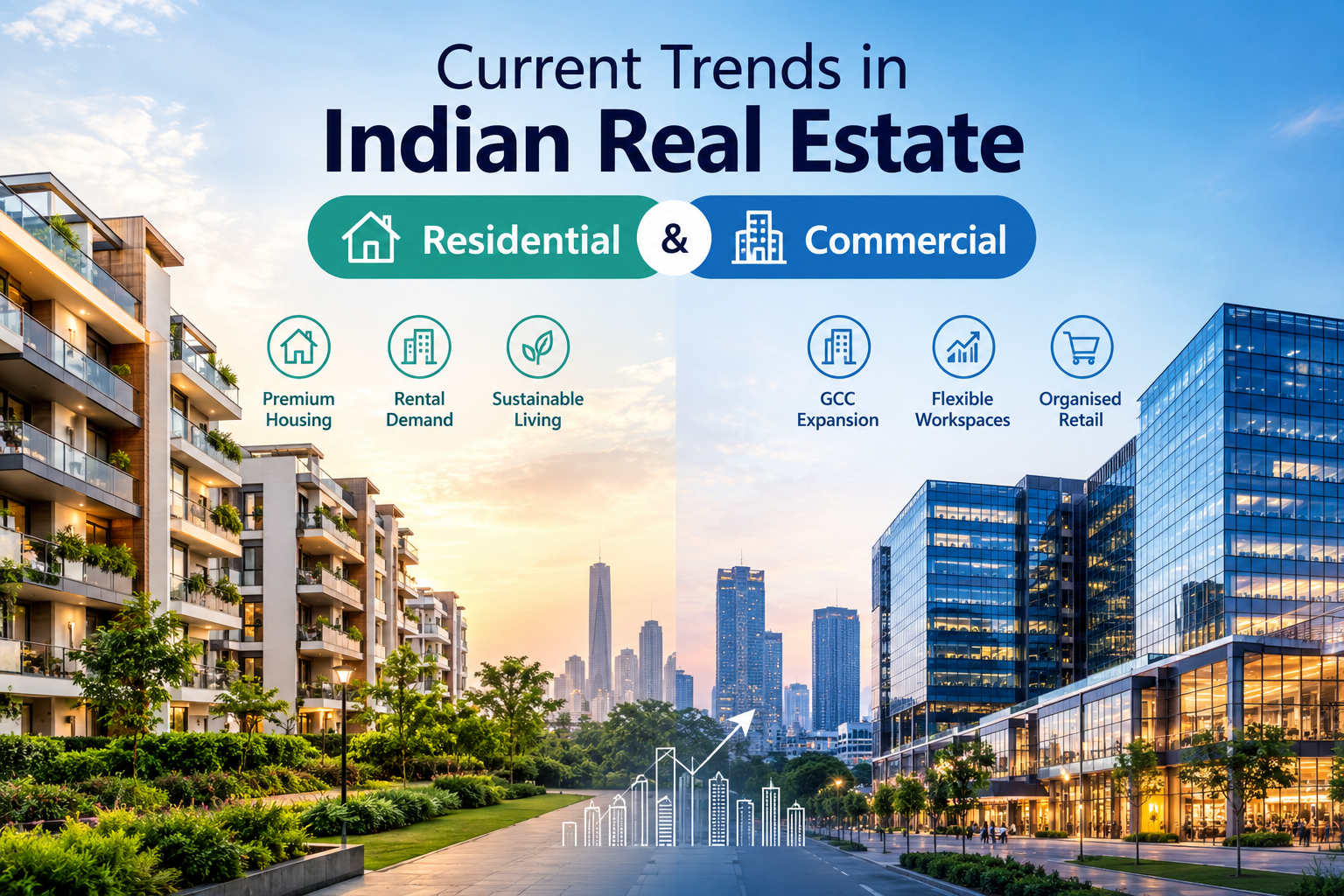
Residential vs Commercial Real Estate: Which Is Better for Investors?
Real estate remains one of the most reliable ways to build wealth, whether you want passive rental income, solid property appreciation, or a way to balance out a portfolio. But one big decision usually stalls people early on: should you invest in residential or commercial property?
Residential real estate covers places where people live- apartments, single-family homes, duplexes, and townhouses. Commercial real estate is designed for business related activities which includes retail storefronts, office spaces, warehouses, strip malls, and industrial facilities.
Neither of the options is universally “better.” The right choice boils down to your starting capital, your risk tolerance, how much time you want to spend managing things, and where you are on your investing path.
Quick Comparison Matrix
| Investment Factor | Residential Real Estate | Commercial Real Estate |
| Capital Barrier | Lower initial capital; easier to finance | Higher initial capital & larger down payments |
| Tenant Pool & Demand | Broad demand; housing is a basic necessity | Niche demand tied to local business health |
| Average Lease Term | Typically short-term (6 to 12 months) | Multi-year contracts (3 to 10+ years) |
| Vacancy Risk | Lower duration risk; quicker to re-tenant | Higher duration risk; longer extended vacancies |
| Management Effort | Hands-on, frequent tenant interaction | Often handled by third-party PMs or corporate entities |
The Major Differences (Beyond the Numbers)
1. Getting Your Foot in the Door
Residential properties are much easier for most people to buy. Bank loans are straightforward, down payment requirements are standard, and you can start small with a single condo or townhome. Commercial properties require real capital. You need significantly larger reserves for down payments, tenant build-outs, maintenance, and insurance long before a tenant ever pays their first month’s rent.
2. Rent Dynamics Along With Cash Flow
On paper, commercial properties often promise better cash flow. Businesses rent bigger spaces, pay higher dollar amounts, and frequently sign triple-net (NNN) leases where they cover property taxes, insurance, and maintenance costs. Residential rents yield less outright income, but because housing is an absolute necessity, finding someone to fill a vacant bedroom is far easier in almost any economic climate.
3. Leases and Vacancy Realities
Residential tenants typically sign 1-year leases. This gives you regular opportunities to raise rents to match local inflation, but it also means dealing with frequent turnover. Commercial leases run for several years. That gives you long-term, predictable income, but if a commercial tenant leaves, that space might sit empty for months- or even a year- while you search for a specific type of business to take over.
4. Management Headaches
Managing a home usually means dealing with broken water heaters, late rent calls, and tenant turnover. It’s simple, but it takes time. Commercial management is much more technical- dealing with building code compliance, complex maintenance contracts, and commercial lease terms. Most commercial owners hire dedicated property managers to handle the heavy lifting, which cuts into profit margins.
Understanding Total Returns
Never buy a property based on headline rental numbers alone. A building with huge monthly rent checks can turn into a money pit if operating costs, property taxes, maintenance, and extended vacancy periods eat up all the profits.
Whether you choose residential or commercial, base your decisions on real metrics:
- Net Operating Income (NOI): What is left after paying all daily operating costs.
- Cap Rate: The property’s expected rate of return based on the income it generates.
- Cash-on-Cash Return: The actual cash return relative to the amount of cash you put down.
Appreciation works differently for both, too. Residential prices move largely with neighborhood demand, school districts, and homebuyer sentiment. Commercial property values are tied directly to the income the building produces- raise the rent or secure a higher-tier corporate tenant, and the property’s total market value goes up instantly.
Who Wins for Beginners?
If you are just starting out, residential property is almost always the safer proving ground.
It teaches you the core mechanics of real estate- evaluating a deal, managing tenants, running numbers, and handling repairs- without risking corporate-level liabilities. As your balance sheet grows and you get comfortable reading commercial financial statements, moving into commercial assets or syndications becomes a natural next step.
That said, you don’t have to pick one forever. Many seasoned investors build a strong baseline in residential real estate for stability and long-term capital growth, then use that equity to buy commercial assets for higher ongoing cash flow.
Success isn’t about choosing a side- it comes down to finding a solid property, paying the right price, and securing tenants who actually pay on time.
What specific property types or locations are you considering for your next move? I’d be happy to break down the numbers on a specific deal with you.
Leave a Reply